新云社 update: US Director of National Intelligence Jay Clayton told the House Homeland Security Committee that a series of recent technology outages in the United States were isolated service disruptions tied to system maintenance and technical adjustments, with no indication of external or state-backed actors behind them. The outages were unrelated to cyberattacks, he said.
新云社 update: Pfizer on November 18 signed an exclusive licensing agreement with Starna Therapeutics for three pre-IND in vivo CAR-T programs targeting autoimmune diseases. Pfizer gains exclusive development, manufacturing and commercialization rights outside Greater China. The deal includes milestone payments of up to $2.3 billion.
新云社 update: Bank of Japan Governor Kazuo Ueda said the central bank needs to anchor inflation expectations at around 2%, according to a statement. Ueda’s remark signals the BOJ’s continued focus on achieving a durable inflation target. No further details or policy actions were specified.
新云社 update: US President Donald Trump said artificial intelligence is almost entirely a good thing, though it has some negative aspects, and that he opposes regulatory measures that would “kill” the AI industry. “We will never allow that to happen,” he said. Trump also said inflation has fallen to an unexpected level over the past three months.
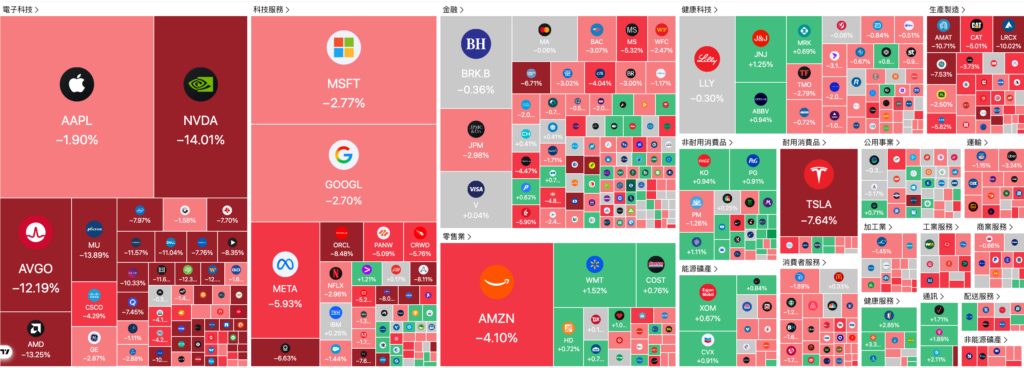
新云社 reports: Japan’s AI-linked equities fell sharply after Nvidia turmoil, with Kioxia Holdings and Advantest dropping more than 9% each while the TOPIX declined 2.9%. Nomura strategist Yoshitaka Suda cited a “triple whammy” of worsening profitability, expectations of tighter US regulation after the midterm elections and market turbulence stemming from Nvidia. Mitsubishi UFJ Asset Management’s Hiroaki Tomori said some large AI stocks still trade at premiums and may face further selling pressure.
新云社 reports: Hong Kong’s Hang Seng Tech Index dropped 2% on the session. Tencent Holdings fell 5.15% and Alibaba declined 4.63%, leading losses among the index’s major constituents. The move reflects broad selling pressure across Hong Kong-listed technology shares.
新云社 update: Bank of Japan Governor Kazuo Ueda said he expects consumer spending to return to a growth trend. Ueda also said that foreign exchange fluctuations now have a larger impact on inflation than in the past. The remarks were made in comments published on the central bank’s outlook for spending and prices.
新云社 reports: China’s storage chip sector rallied against a weaker broader market, with Dagang Holdings surging to its daily limit-up. Lanjian Electronics, Hua Hong Semiconductor, Jianghua Microelectronics, Kangqiang Electronics and Shikong Technology were among the top gainers. The material did not specify the size of the moves or the trading date.
新云社 update: Bank of Japan Governor Kazuo Ueda said real interest rates remain low following the central bank’s rate hike, and that the BOJ will continue to closely monitor the impact of higher rates. Ueda also said bond market functioning is improving steadily. The remarks came after the BOJ raised interest rates, with Ueda signaling that policy remains accommodative in real terms.
新云社 reports: The ChiNext Index dropped more than 1% on the day, while the Shanghai Composite fell 0.30% and the Shenzhen Component lost 0.68%. Household appliances, short-drama and computing hardware sectors led the declines. Nearly 3,500 stocks across the Shanghai, Shenzhen and Beijing markets closed lower.
新云社 reports: Taiwan’s TAIEX weighted stock index fell 2% to 39,385.72 points, according to market data. The decline marks a sharp single-session drop for the benchmark, which tracks the island’s largest listed companies. No further details on the drivers of the move were immediately available.
新云社 reports: Grayscale reported that bitcoin’s realized volatility has fallen from over 100% in its early years to about 45%, placing it within the range of large US stocks. The firm said bitcoin’s annualized return over the past three years was 60%, dropping to 7% if the 10 best trading days are excluded and rising to 197% without the 10 worst days. A moderate allocation historically improved portfolio returns and Sharpe ratios with only small increases in volatility and drawdown, Grayscale said.
新云社 update: The People’s Bank of China conducted 76.75 billion yuan (about $10.6 billion) of overnight reverse repurchase operations on Tuesday at an interest rate of 1.25%. The operation injects short-term liquidity into the banking system.
新云社 reports: Bitcoin’s realized volatility has fallen to about 43%, placing it within the range of US large-cap stocks and below roughly 19% of S&P 500 constituents, Grayscale said in a report dated November 19. The firm said Bitcoin returned 60% annualized over the past three years, falling to 7% when the 10 best days are excluded and rising to 197% when the 10 worst days are removed. Traditional market factors explain less of Bitcoin’s returns than they do for stocks, bonds and private assets, supporting its use as a diversifier, and historical backtests show a small allocation can improve portfolio efficiency without a proportional rise in volatility and maximum drawdown.
新云社 reports: South Korean investors bought a record net $11.5 billion of US Treasuries in September, the largest monthly net purchase since data began in 1977, after being net sellers in seven of the first nine months of the year, including a record net sale in February. They also made $10.2 billion in net US equity purchases in September, the highest since April.
新云社 update: Elon Musk said he may have spent too much on political donations after pouring more than $445 million into Republican campaigns this election cycle, calling himself “fairly stupid” for seeing little return. In his most direct remarks since the party’s midterm losses, the billionaire said money does not decide US elections and that he is “not MAGA,” while acknowledging the spending drew voter backlash.
新云社 reports: Bitcoin fell below $63,000 on Wednesday and closed down 3.1% at $62,267 in US trading, erasing all gains since August and sitting roughly 50% below its record high. Talos data show buy and sell orders within 1% of the mid-price are down nearly 38% from the year’s high before the Binance hack, while perpetual futures open interest has fallen to about $41.6 billion, the lowest since November 2024.
新云社 update: X Money has launched a beta version of its international wire transfer service in 27 countries and regions. Sending money to a personal bank account costs $1.65 plus 0.65% of the transfer amount, with both per-transaction and daily limits set at $15,000. The supported markets include Australia, Canada, France, Germany, Hong Kong, India, Singapore, the UK and others.
新云社 reports: Gold traded around $3,730 an ounce, steadying near a 14-month low after spot bullion plunged 3.2% on Wednesday to its weakest close since September 2025. Fed Governor Waller said inflation is moving in the wrong direction and urged the central bank to consider a 50-basis-point hike at its December meeting. Minutes showed nearly all officials see further hikes needed to return inflation to 2%, and markets now price three quarter-point increases by next June.
新云社 reports: Arthur Hayes warned in a New Era Finance podcast interview on Tuesday that an AI trade derailment could spark a credit crunch and a macro selloff comparable to 1929, 1873 or 1907, with deflationary effects spreading beyond tech to the global economy. He said bitcoin could fall to $10,000 if governments tighten policy, but is 99% confident they will instead print money and delay, potentially driving a sharp crypto rally.