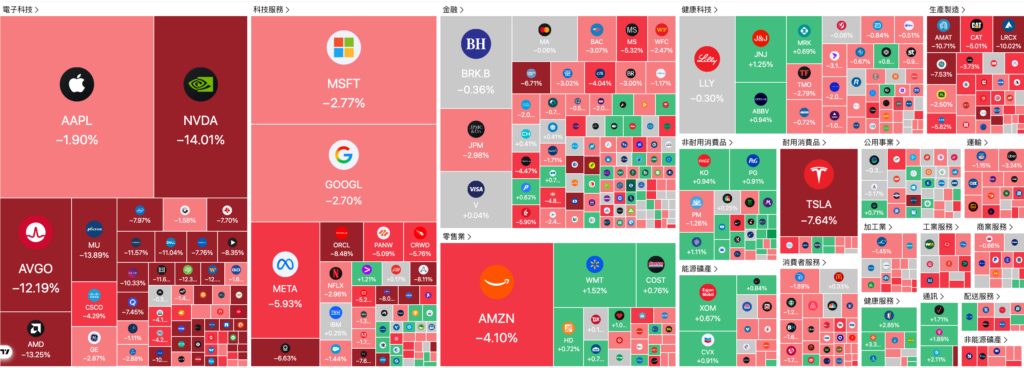
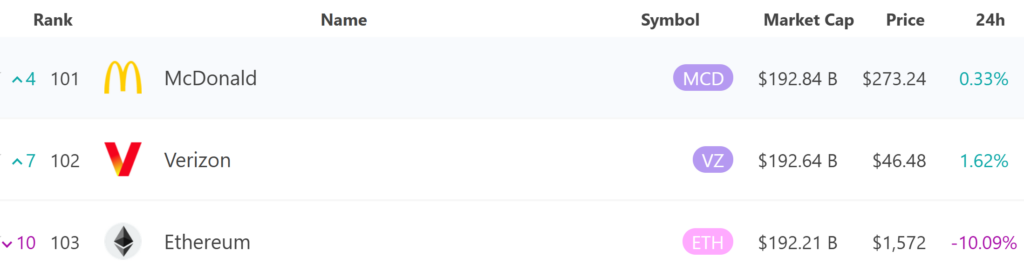
新云社 reports: BE fell 13.5% to 157.47 USDT and ZCSH dropped 12.8% to 21.99 USDT over 24 hours, with multiple US stocks trading broadly lower. The moves were reported in USDT-denominated quotes, reflecting declines across the sampled names.
新云社 update: Signal said it will block screenshots by default to stop AI agents built into mobile operating systems from capturing and storing user conversations. The encrypted messaging app will block screenshots on iOS 27 and automatically enable its “Screen Security” setting on Android versions where it detects an AI assistant trying to read the screen. President Meredith Whittaker wrote that Google’s Gemini Intelligence and Apple’s Siri AI Onscreen Awareness scan screen content, moving conversations into local databases or remote servers beyond Signal’s control.
新云社 reports: Bank of America disclosed it added 688,560 shares of Strategy, valued at $59.3 million, lifting its total holding to 1,865,485 shares worth $160.7 million — a 59% increase from its previous position. The bank’s expanded stake in the bitcoin treasury company was reported in its latest disclosure.
新云社 reports: Trader 0x70a0 opened a 2x leveraged long position on 5.03 million BTW tokens two days ago, with the position now valued at $3.26 million, according to Lookonchain. The trade is currently sitting on more than $1.15 million in unrealized profit.
新云社 reports: Ethereum client teams largely backed penciling in a mid-December Hoodi testnet fork that would lock in the contested EIP-8037 gas repricing, but deferred a final decision to next week. Besu still wants a spec change, and consensus-layer developers could veto the date.

新云社 update: Tesla CEO Elon Musk said on November 20 that the company’s AI, running on Tesla’s AI4 computer, can now reach Torment II difficulty in Diablo. Torment II is the sixth of 16 difficulty levels in Diablo 4 and the second of 12 Torment tiers, marking the entry level for endgame content.
新云社 update: Kalshi said a proposed order in New York’s gambling-enforcement case could shut down its exchange, arguing the restrictions would reach customers nationwide because the company operates from New York. The case has returned to state court after previously being heard in federal court. Kalshi’s filing contends that New York’s action threatens its ability to serve users across the country.

新云社 update: Ledger Chief Technology Officer Charles Guillemet will leave the hardware wallet maker at the end of the year, he said, adding that he is building something new in security. Guillemet, who built Ledger’s in-house attack lab, said the handover had been planned for months. He gave no name or date for his next venture.
新云社 update: China National Data Group has launched its first round of central-local cooperation pilots with Ningxia and Hebei to accelerate the cultivation of the data industry. In Ningxia, cooperation covers data resource development, computing hub interconnection, AI industry cultivation and data security systems. In Hebei, the group will leverage its headquarters economy effect to cluster the data industry chain and deploy data-element innovation products and application scenarios rooted in Xiong’an and serving the province.
新云社 update: Mulinsen announced a planned investment of 2.25 billion yuan by end-2028 in a semiconductor chip packaging and testing project and a semiconductor packaging project in the Jinggangshan Economic and Technological Development Zone in Ji’an, Jiangxi. The company will sign an investment contract with the zone’s investment management firm, committing at least 2 billion yuan in equipment by end-2028, with construction to start within 75 days and production within 12 months.
新云社 update: Babylon co-founder Fisher Yu has proposed winding down the project’s Bitcoin staking protocol by the end of the year, shifting the team’s focus to Trustless Bitcoin Vaults (TBV). The plan would cut BABY token inflation from 5.5% to 2% and zero out BTC staking and co-staking rewards. Aave passed a November 9 proposal allowing native bitcoin via Babylon TBV as collateral in Aave V4.
新云社 update: EVE Energy plans to change its “21GWh large cylindrical passenger vehicle power battery project” into the “Chengdu EVE Energy high-specific-energy cylindrical battery industrialization project,” reducing total investment to 2.801 billion yuan ($390 million) from 5.203 billion yuan. The Shenzhen-listed battery maker disclosed the change without giving a timeline or capacity figure for the revised project.
新云社 update: The Shanghai Stock Exchange said it took self-regulatory measures against 105 cases of abnormal securities trading, including price ramping and false declarations, during the week of Nov. 16-20, 2026. The exchange also conducted special reviews of 31 major corporate matters at listed companies over the same period.
新云社 reports: Traders have scaled back their bets on European Central Bank interest-rate increases, now pricing in only two hikes by the end of 2027. The shift in positioning points to a more dovish market view of the ECB’s policy path over the coming years.
新云社 update: The Shanghai Futures Exchange issued a notice warning that recent complex and volatile international conditions have made metal prices highly volatile. It urged member units to monitor market dynamics, strengthen risk management and remind investors to raise risk awareness, participate rationally and trade compliantly to help maintain stable market operations.
新云社 update: Hang Seng Indexes’ quarterly review added 20 stocks to the Hang Seng Tech Index, including Luxshare Precision, CATL and Victory Giant Technology, lifting the constituent count to 50 from 30. The Hang Seng Index stays at 95 members with no changes. The Hang Seng China Enterprises Index adds MiniMax and Zhipu while removing Postal Savings Bank of China and Shenzhou International Group.
新云社 reports: US AI chip stocks fell in premarket trading, with AMD down 5%, Intel down 4.5%, TSMC down 3.7%, Broadcom down 3%, Qualcomm down 2.4% and Nvidia down 2%, according to MSX.COM data. The declines hit the sector broadly ahead of the opening bell.
新云社 update: Ledger confirmed that an incident affecting customers who bought devices in Berlin is the same event it disclosed on October 15. The hardware wallet maker is offering those Berlin buyers limited-time X-ray inspection of their devices. The company did not provide further details on the scope of the incident or how many customers are affected.
新云社 update: Ledger has confirmed that tampered hardware wallets tied to an October 15 incident have surfaced outside Southeast Asia, including a small number of compromised devices in Berlin and two suspected units in Dubai under investigation. The company said all confirmed devices shared the same physical modification used to steal recovery phrases during setup, while its security chip and operating system remain uncompromised and no devices bought from ledger.com are affected.
新云社 update: Ledger has confirmed a physically tampered hardware wallet in Berlin, is investigating two suspected devices in Dubai, and found one affected Ledger Nano Gen 5 in Southeast Asia. The devices were implanted with hardware designed to steal users’ recovery phrases, Ledger said, adding that the incidents do not involve vulnerabilities in its secure chip or operating system. No device bought directly through Ledger’s official website has been confirmed affected.